
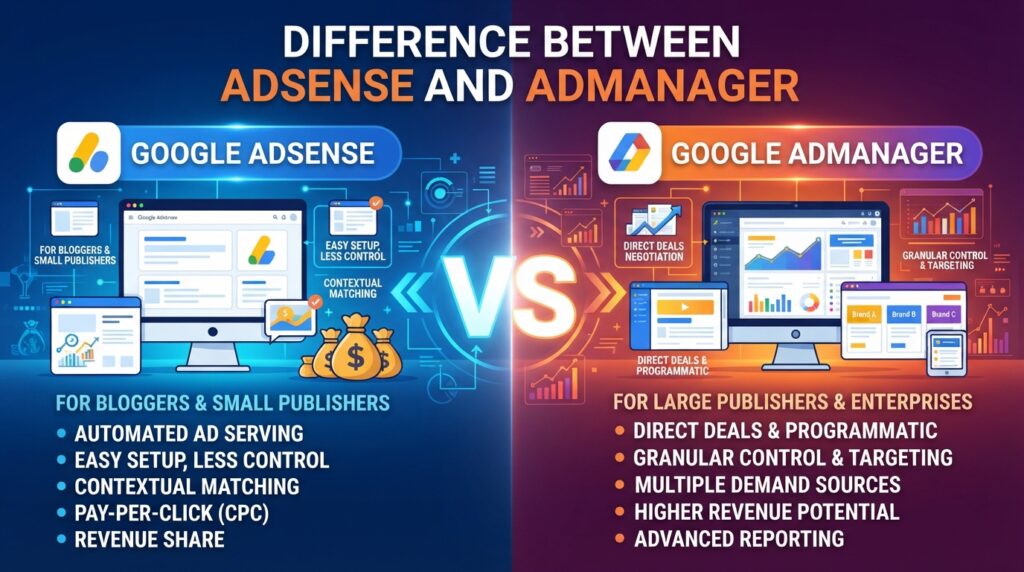

Navigating Google’s monetization ecosystem can be confusing for publishers and content creators. While Google Ads, Google AdSense, and Google AdManager are closely related, they serve entirely different roles in the digital advertising landscape.
Understanding the Google Ad Ecosystem
To choose the right tool for your monetization strategy, it helps to understand where each platform sits in the digital marketplace:
- Google Ads: Designed for advertisers who want to create and run ad campaigns across Google’s network.
- Google AdSense: Built for small to medium-sized publishers looking to monetize website traffic easily with automated ad placements.
- Google AdManager: An enterprise ad management platform created for large publishers requiring granular ad serving, direct campaign sales, and dynamic yield optimization.
What is Google AdSense?
Google AdSense is an entry-level monetization ad network. Once approved, publishers place a single piece of code on their site, and Google automatically serves contextually targeted ads. AdSense manages bidding, ad selection, and delivery with minimal setup required from the site owner.
Key Features of AdSense:
- Simple setup requiring little to no technical knowledge.
- Automated optimization via Auto Ads.
- Earn revenue automatically through CPC (Cost Per Click) and CPM (Cost Per Impression) models.
- Ideal for niche blogs, small sites, and growing digital publishers.
What is Google AdManager?
Google AdManager (formerly DoubleClick for Publishers / DFP) is a complete ad server platform that gives publishers granular control over their ad inventory. Unlike AdSense, AdManager allows you to manage direct advertising sales, programmatic buyers, and third-party ad networks all from a single central dashboard.
Key Features of AdManager:
- Centralized management for direct sales campaigns and sponsorships.
- Advanced user targeting (geo-location, custom key-values, device types).
- Dynamic allocation enabling AdSense, Google Ad Exchange (AdX), and third-party networks to compete in real-time.
- Granular inventory management and custom reporting metrics.
AdSense vs AdManager: Key Differences
While AdSense acts primarily as a demand source, Google AdManager functions as a full-scale ad server. Below is a direct comparison of their main capabilities:
| Feature | Google AdSense | Google AdManager |
|---|---|---|
| Primary Audience | Small to mid-sized content publishers | Enterprise-level media publishers |
| Platform Type | Ad Monetization Network | Comprehensive Ad Server & Yield Platform |
| Direct Deals Support | No direct advertiser deals allowed | Yes, manages direct sales & custom campaigns |
| Control Level | Automated placements & minimal configuration | Complete granular control over inventory & rules |
| Technical Expertise Required | Low | High (requires ad operations skills) |
Which Platform Should You Choose?
If you run a smaller website, blog, or channel and want a hands-off revenue generation model, Google AdSense is the most practical choice. However, as your site grows, reaches enterprise-level traffic, or begins selling ad space directly to brands, transitioning to Google AdManager will allow you to maximize revenue through detailed yield optimization and unified auction management.